

Traveling Off the Beaten Path In Umbria

Looking out over the Umbrian countryside from the hilltop town of Allerona
When my husband and I decided to visit Italy for the first time, we read many guides and asked family and friends for recommendations about where to travel. Everyone suggested we start with “The Big Three”: Rome, Florence, and Venice. But with just 10 days allotted for travel, the mere thought of jamming three cities into a short timeline, with long lines and crowds, made me want to throw my hands up in the air and scream “Mama Mia!” What we really wanted was a deeper experience of Italy, where we had a chance to enjoy the local cuisine, really get to know the people, and learn about the country’s rich culture. We almost ditched the whole idea of visiting the country until we came across a blogpost about a newly emerging trend: slow travel. We clicked though a link to Villaggio Tours, an Umbria-based company offering curated, fully escorted, immersive tours. Wow. Relaxed, small-group excursions? Living and dining with the locals? Discovering nearby hidden treasures without all the crowds? Yes, please!
We immediately booked a call with Liz Heath, owner and founder of Villaggio Tours. Liz is an American travel writer who is married to Paolo, an Italian, and has lived in the Umbrian town of Allerona for many years. She shared a sample itinerary that included simple pleasures, like pasta making with extended family, foraging for mushrooms with a local expert (another family member), olive or grape harvesting, wine tasting, guided nature walks and home-cooked meals with Liz’s family and friends in town.
We were all in.
We booked our flight to Rome for the first week in October, hoping to avoid the intense summer heat and large crowds. After a quick stay and visits to most of the major attractions, we were on our way to Orvieto, about an hour’s relaxing ride via Trentitalia, Italy’s regional train line. Liz greeted us with open arms in Orvieto and pointed out landmarks as we ascended the hill to the medieval town of Allerona, and our slow-travel, 5-day Italian adventure began.
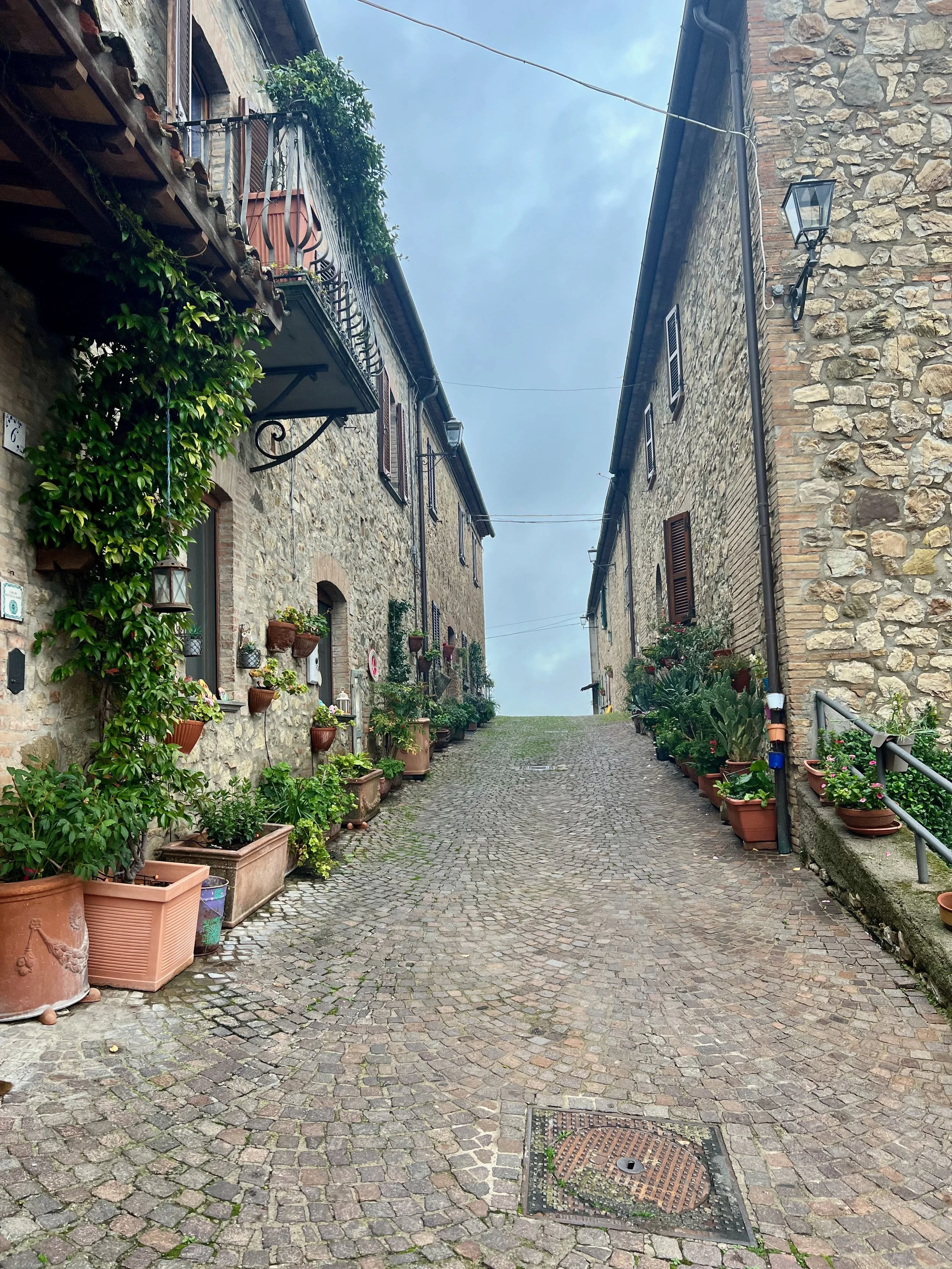
Stepping through the gates of borgo Allerona, you are transported back in time
Day One:
Named one of the most beautiful villages in Italy, the borgo of Allerona sits high on a hill and within the walls of an 11th century castle. Liz ushered us through the narrow cobblestone streets and ancient stone houses brimming with flowers and native plants. I couldn’t help but feel we had stepped into a place where time stood still-where whispers of long-gone souls seemed to waft through the alleys. As we settled into Nona Rosa’s apartment with sweeping views of the Umbrian countryside, we opened the windows to let in the sunshine and warm breeze, then ventured down to meet Liz’s family and friends at La Panatella, the local trattoria. Head chef, Margherita Cannas, who lives in the village, bases her menu off of seasonal/farm-to-table cuisine including delicious dishes like ravioli, cured meats, and rice dishes.

Mushroom risotto at La Panatella
Next, we had a tour of the Church of St. Maria Della Stella by Padi, a local resident and church historian, who explained the church’s evolution, from its original design in the 11th century through renovations in the 1800s, until now. The restored Alabaster windows diffuse the light, giving the church a soft glow and the vaulted ceiling above the altar feature a glorious fresco of the Virgin Mary by Italian painter Arturo Viligiardi.

Interior of Church of St. Maria Della Stella in Allerona
Later, we toured a locally owned, award-winning olive farm, with Momi, whose family is descended from Allerona’s original inhabitants. That evening he and his wife gave us a tour of his ancestral palace home and we connected over drinks and a sumptuous spread of local cuisine.

A 200-year-old olive tree on Momi’s olive farm

Fresco in Momi’s ancestral home
Day Two:
Sunday church bells tolled under a picture-perfect blue sky as we prepared lunch in Franca’s (Liz’s mother in law’s) kitchen. We took turns rolling out pasta and stirring sauce, and assembled ravioli and tiramisu along with Paolo’s aunts, uncles, and cousins (with Liz as our translator). Homemade bottles of wine magically appeared on the table, along with home-cooked snails, hand-picked truffles, desserts and enough family lore for a Netflix mini-series. When our bowls of steaming pasta and sauces arrived, glasses were filled (and refilled), toasts were made, and more jovial laughter, second-helpings, story-telling and grappa consumption ensued.

Preparing ravioli filling in Franca’s kitchen
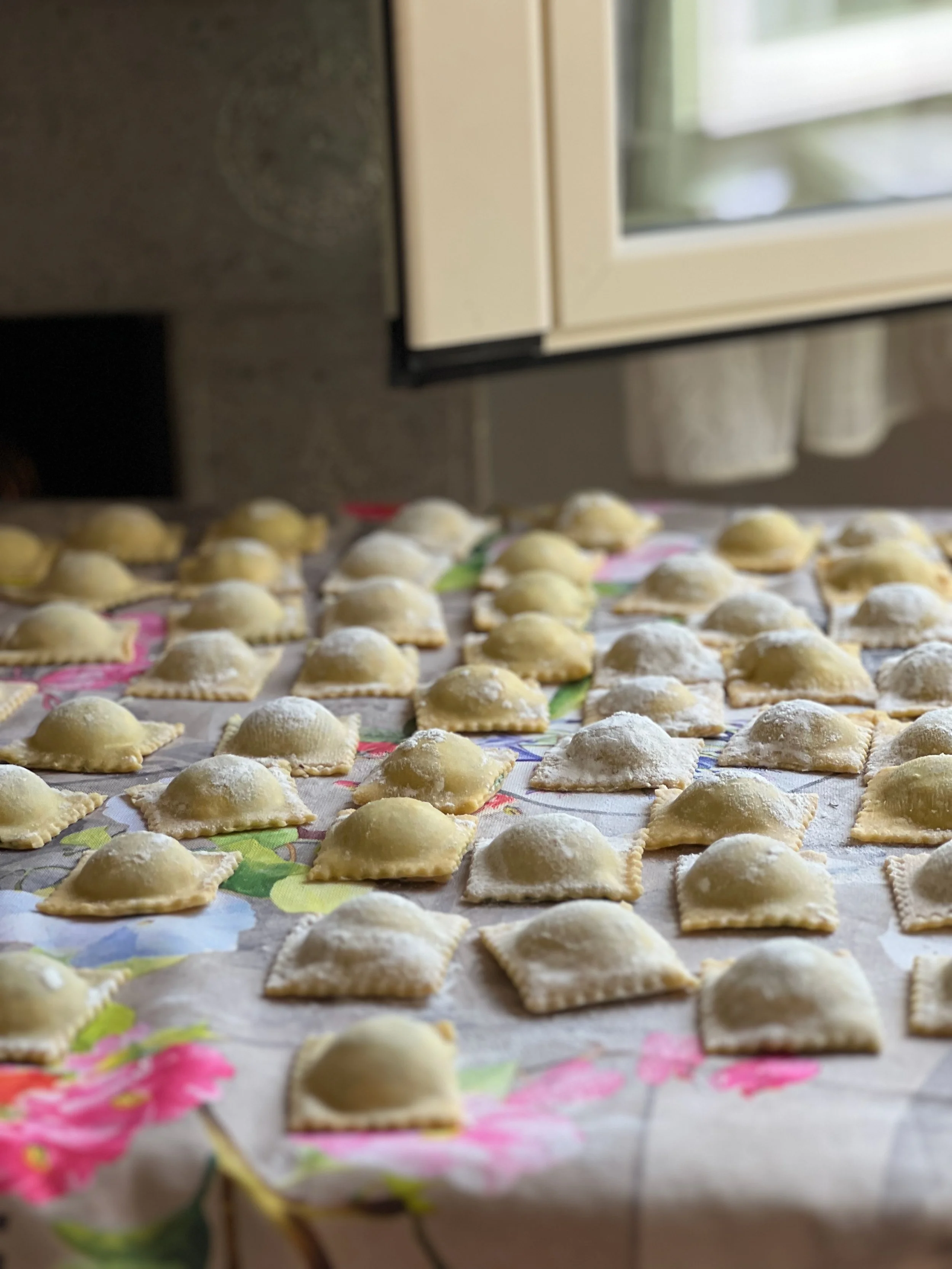
Fresh, homemade ravioli!
That evening, we visited a field outside of town to celebrate the anniversary of a fossilized whale discovery. Interpretive dancers and musicians recreated the whale’s journey in an open field overlooking the picturesque hills of the Umbrian countryside. As the sun began to set, we walked up a dirt road to a hamlet where pizza, pork and beans, and focaccia were served along with lively music and dance.
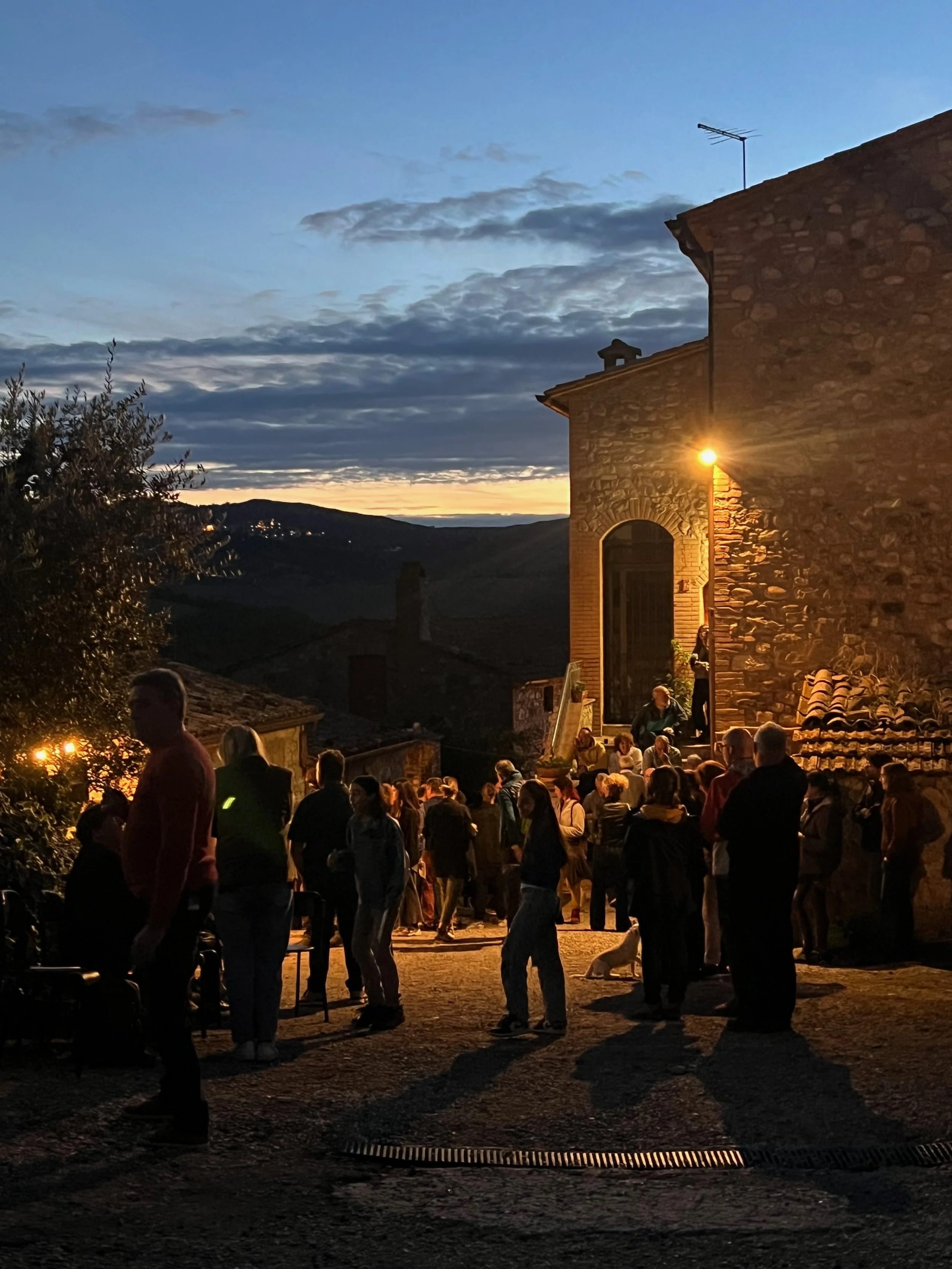
Evening descends on a small Umbrian hamlet
Day Three:
Our day kicked off with an excellent 4-hour tour by Luciana, of Umbria in Tours, and included a visit with Lamberto Bernardini, the maker of L’Orvietan, an ancient medicinal drink and after-dinner “digestive.” Bernardini spent years in search of the original formula and has painstakingly brought back the production of this medieval herbal drink. While it’s not something I’ll probably ever drink again, it was interesting to taste and enlightening to hear of its medieval origins and uses.

Sampling Orvietan herbal beverage
We also toured the Duomo di Orvieto church, the oldest church in Orvieto known for its spectacular gold and mosaic facade and magnificent frescoes, and finished with a walk-through of an ancient Etruscan archeological site and caves.
From there, we lunched at Osteria da Mamma Angela a authentic Italian trattoria, dripping in ambiance, good wine, friendly servers and delicious food.
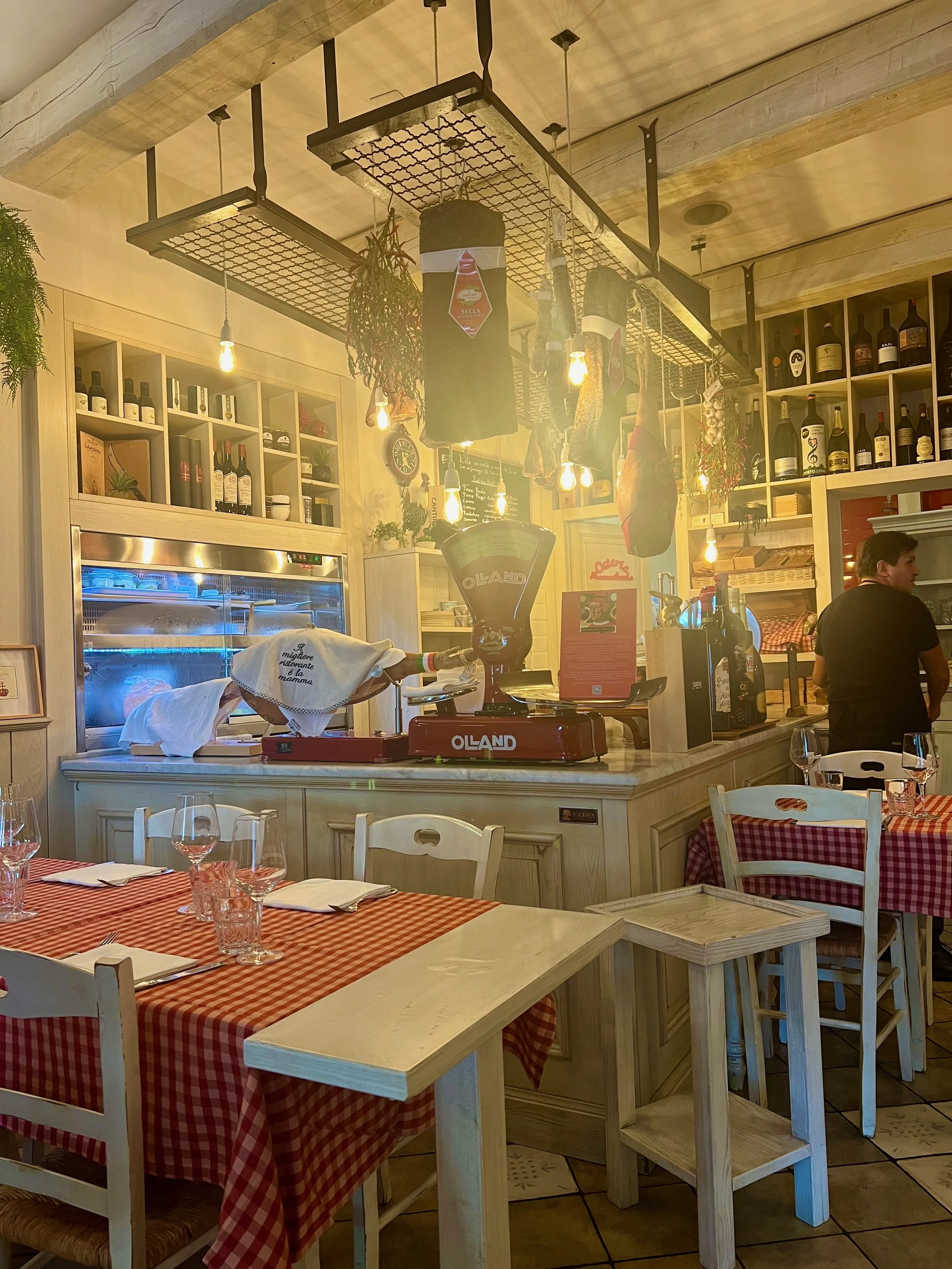
Quaint dining at Osteria da Mamma Angels in Orvieto
A few glasses of wine later, we made our way down the 200+ steps of the Pozzo De San Patrizio, an ancient Etruscan well built in the 1530s to supply Orvieto with water during times of war. Climbing back up was a great way to get our heart rates up (and shake off any lingering effects of wine!).
But at this point, we were both winded and had clocked some record-setting steps, so we gladly rode the funicular down to our waiting van and drove north out of Orvieto to the Frantoio Cecci olive mill for the 2024 inaugural raccolta delle olivi (olive harvest) production and olive oil demonstration. I’d never really thought about where olive oil comes from, but I loved seeing the entire process and will never think of (or taste) olive oil in the same way!


After a quick rest, we headed out for a lively dinner hosted by Manuela, a friend of Liz’s, and her large group of friends, who graciously prepared a feast of local rabbit, chicken, and roasted potatoes, roasted chestnuts, along with bottomless bottles of wine and grappa. We heard colorful stories of everyday life in Umbria (think wild boar hunts, farm animal veterinary care, and wine-making tips) which were altogether fascinating and entertaining to these native New Yorkers.
Day Four:
Torrential rain kept us from a scheduled visit to Civita di Bagnoregio, an ancient walled “dying city” built high above a hilltop. Instead, we spent a relaxing day at Fonteverde, a hot springs spa in Tuscany. Liz was great at switching up the itinerary on a moment's notice and we got a much-needed day of R&R (and a fabulous massage).
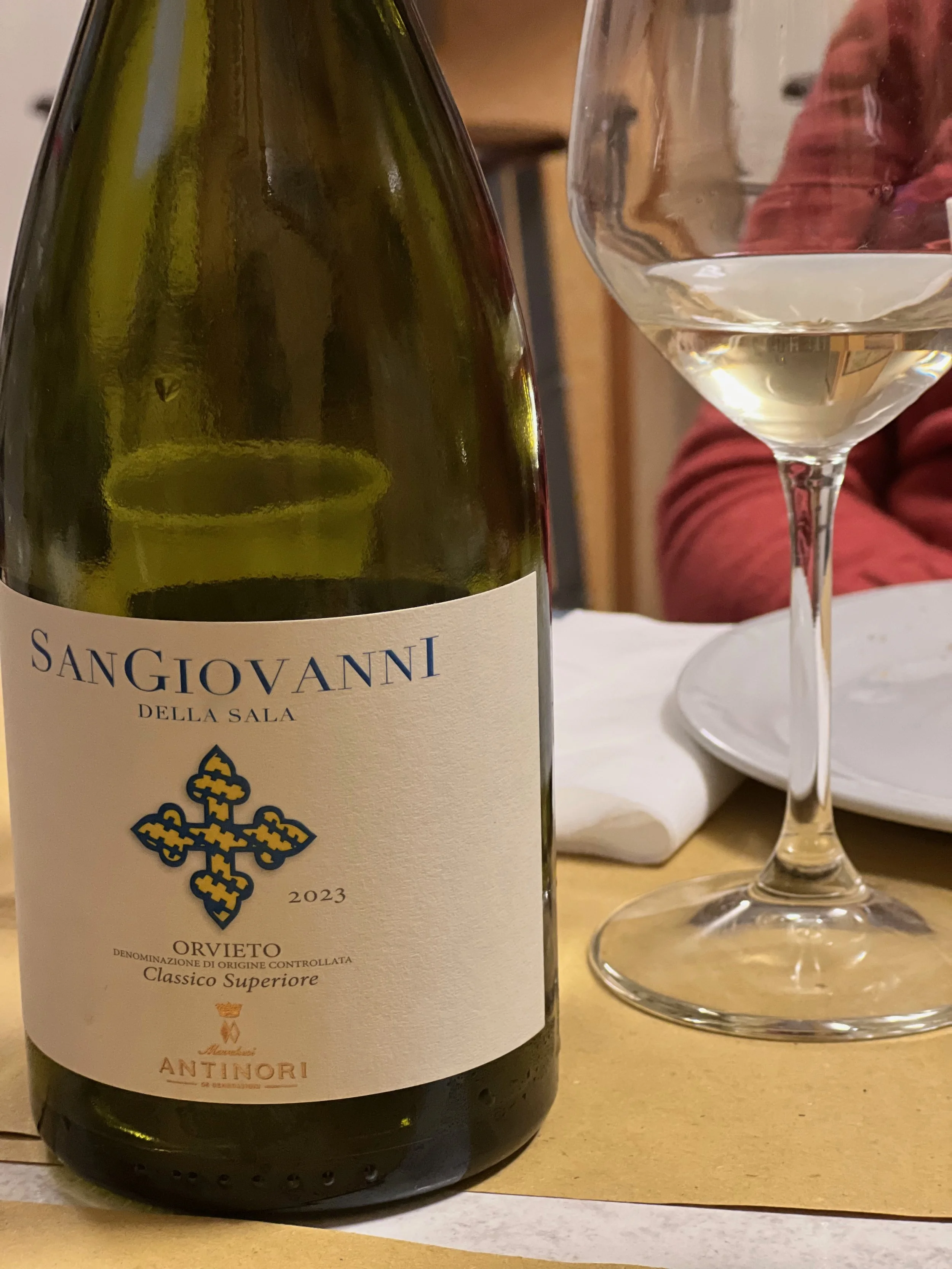
Later, we navigated through flooded streets and past raging brown rivers on our way to a lovely wine tasting at Cantine Neri winery. We tasted several reds and whites with Fran and Greg, two American friends of Liz who live in Allerona and split their time between the US and Italy.
Day Five:
We started our day with a 2-hour walking tour of the Parco di Villalba woods with Adio, a naturalist who pointed out edible plants and herbs and the history of the surrounding land. Later, Adio prepared a rustic lunch at his Hosteria di Villalba, featuring dishes made with some of the wild herbs we’d seen on our walk: malva, chicory, and stinging nettle-infused risotto, herbed chicken and potatoes, along with panne cotta, and wine (of course!)
Then, we were treated to mushroom picking with Peppe, Paolo’s brother in law and expert mushroom hunter. I have never seen so many varieties of wild mushrooms, all within such a small area. Recent rain and spate of sunshine and warm weather had made conditions ripe for a burst of mushroom growth. Peppe carried a basket, a walking stick, and his keen sense, giving an emphatic “YES!” or “NO!” each time we found another treasure.

Peppe collecting mushrooms

Our mushroom haul with Peppe
Finally, for our farewell dinner, Liz arranged a surprise pizza party at a family member’s home. We were greeted with cheers, hugs, homemade wine, and trays and trays of homemade wood-fired pizza. Also, a spicy dish of legendary Chingalle (wild boar) appeared along with homemade lemon squares, Nutella cakes, and of course, Grappa for a very raucous send-off. After all the hugs and goodbyes, I couldn’t help but get misty-eyed at our parting. We had literally dropped into this town as strangers and come away as friends. And, while all of our lives are so different, we each brought a shared fascination for how we live every day. I found that despite our language differences (Liz translated most of our conversations), there were many times when simple hand motions, hugs and facial expressions were our silent, common language. And that is the beauty of travel: making connections that will forever enrich your life. Liz at Villaggio Tours does this masterfully, uniting folks around food, drink, customs and culture.
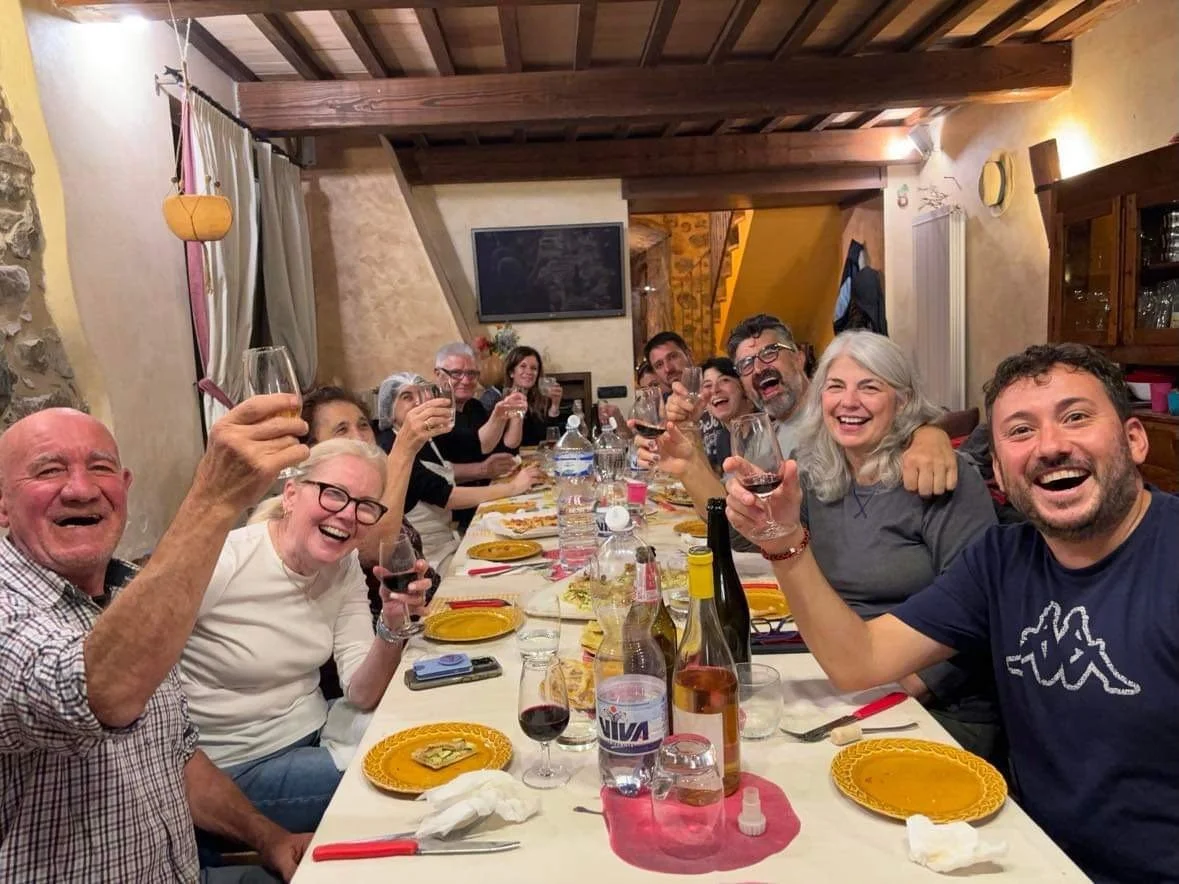
Farewell dinner with our new Italian friends
The most joyful part of our time in Allerona was witnessing Liz and her community’s shared sense of purpose and optimism in keeping the lifeblood of Allerona alive while passing along their stories, their unique customs, their natural treasures, and their rich history with total strangers. We left a part of ourselves there too, like spores on a forest floor. Hopefully, slow travel will help Allerona and other off-the-beaten track destinations sprout anew, creating new cultural connections our world so desperately needs.