

How to Host Your First Pop-up Art Shop Like a Pro!
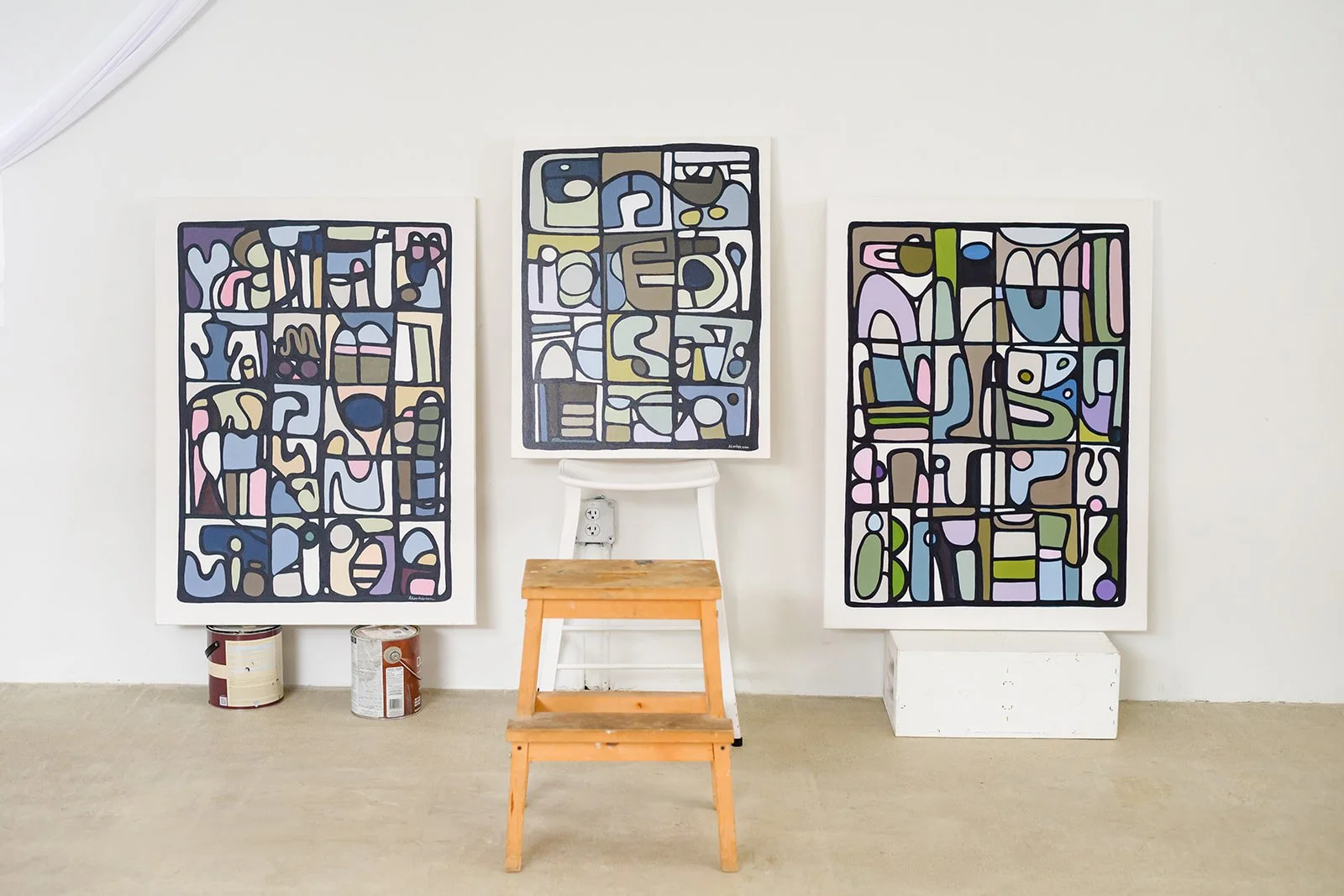
I hosted my first-ever one-day Pop-up Shop last month and it exceeded my expectations in ways I couldn't have imagined. The turnout was beyond fabulous, and the sales were steady, but more importantly, connections were made, conversations sparked, and I learned more about what my collectors want. There are so many benefits to hosting your own event, whether it’s a pop-up shop, a holiday boutique, or an open studio, but there are also some important considerations to factor in while planning, running and closing your show. In this post, you’ll find my timeline, takeaways and tips for everything you need to (hopefully!) have a successful art event.
A little background: One of my big goals for this year was to host either an open studio-type or pop-up event to showcase my work directly to my community. I’d recently moved back to the area after living out of state for 6 years and I wanted to reconnect with old friends and introduce them to my art. This would be a perfect opportunity to do both, but hosting an open studio at home was impossible because of limited indoor space and parking. So I researched local venues with ample parking that could easily be transformed into a gallery-type setting. I found a bright and airy space at a centrally located venue with lots of parking, which I rented for a reasonable fee. Then it was off to the races to prepare! Here’s a sample timeline/checklist you can use for your event:. CLICK HERE FOR YOUR TIMELINE/CHECKLIST AND SEE BELOW FOR A SHORT VIDEO AND THE FULL TIMELINE I USED.
Takeaways:
First off, I owe immense thanks to my friends and family who rallied behind me, offering encouragement, lending a hand with setup, and spreading the word. Their belief in my vision gave me the strength to push through any doubts and fears. Thank you, Erin, Angela, Cheryl and Kate!
Look for not-so-obvious venues. Local restaurants were exorbitantly expensive and my local public library does not allow for-profit events. Get creative and ask around about potential venues. I ended up having mine in a local firehouse meeting space and it was ideal!
Stay on task with spreadsheets. In the weeks leading up to my pop-up shop, I had laid out my timeline and followed it to a tee. I felt well prepared in the days leading up to the show because of this extra planning.
Create a budget and stick to it! I spent way more than I anticipated on art and packaging supplies, and marketing materials (but I’ve got plenty left for my next show).
Market and Publicize! I did very little actual marketing for the event, utilizing my own mailing list and a curated list of local friends for an e-vite. I should have sent out a press release to local newspapers weeks ahead of time. Lesson learned. I totally underestimated how much more marketing and publicity I needed to do to promote the event and will definitely do more next time. You can never do too much to get the word out!
Remember to take pictures of your set up. I got so caught up in the day that I literally forgot to take pictures. I managed to take one short video, but I regret that I didn’t get more pictures.
Be sure to line up lots of help. I relied on the goodness of friends to help set up, work the event and clean up but I know I may not be so lucky next time. Set up and takedown were exhausting, but we all shared some laughs and made it fun.
Dress comfortably. I wish I had tossed fashion aside and just worn a pair of damn sneakers, as I was on my feet for 10 hours and my feet were crying by the end of the night!
Consider your event schedule. Next time, I will definitely consider doing the shop over two or three days instead of one. So much preparation and physical labor went into setting up and taking down the event that it hardly seemed worth it to do it just one day. Next time, I would consider doing a Friday kick-off in the evening, then 4-6 hours each on Saturday and Sunday. Rental fees were higher for weekends and I wasn’t sure what kind of turnout I’d get, so I went with the lower-cost weekday option. I feel confident that, with more publicity, I would get more traffic over the course of two-three days next time.
Finally, was it worth it? Absolutely! I reconnected with so many friends I hadn’t seen in a long time, I got to share my work and discuss my art, and I connected with several potential leads for additional sales. Thankfully, the receipts for the show more than made up for my initial investment in supplies and I now have a complete show-kit and planning sheets for my next event. I would definitely do this again.
If you are considering hosting your own event, I hope this helps you prepare for a wildly successful day. Oh, and one more takeaway: You can never plan too much!
Two months before your event:
Choose a date at least 2 months out (check your local school holiday closings so guests are in-town. I chose an all-day-into-evening Thursday time frame, as this is typically an evening women tend to socialize in my area)
Secure a venue, sign contract
Obtain insurance riders, permits, etc.
Send deposit
Order supplies for finishing: gesso, varnishes, framing supplies, labels, printer cartridges
Finish any collections or pieces for sale
Create a spreadsheet for tracking progress (painting edges, cataloging, photographing, varnishing, framing, hardware and label applied, etc.)
Send unstretched canvases or unframed pieces to framer
6 weeks ahead:
Order supplies for other products you’ll be selling (prints, mats, mounting strips, foam boards cut to size for prints and greeting cards, cello sleeves, labels for prints)
Order any wall systems, tents, hooks, etc. you’ll need for display
Prepare and package prints
Order, prepare and package greeting card sets
Create guest list/mailing list
Create Invitations: hard copy or online invite (compare pricing of various platforms)
Create and order Marketing materials: business cards, postcards, indoor/outdoor signage, labels, shopping bags, stickers
One month ahead:
Send newsletter to subscribers letting them know about your event
Create Social media posts
Create and send invitation
Table displays: Gather tables, tablecloths, baskets, trays, accessories, product display items, signage. Set up a practice display.
Set up and test payment system
Create email sign-up forms (both hard copy with a clipboard and online for an Ipad)
Purchase red dots for SOLD pieces
Purchase receipt book
Obtain a “browser” for prints (or some way to exhibit them)
Create a Portfolio book for visitors to peruse
Create a QR code and signage for link to website/gallery/onine shop
Create price tags for all pieces
Purchase sticky tack or double-sided tape for adhering labels to paintings or wall
Purchase packaging supplies (tissue paper, tape, bubble wrap)
Two weeks ahead:
Decide what food and drink, if any, you’ll be offering
Purchase plates, cups, napkins
Create a Social media post announcing the sale
Create an artist statement and bio for display on your welcome table
Update website, FB, IG bio with event details
One week ahead:
Send a reminder email to invitees. Post reminders on social media.
Confirm venue
Review pieces to ensure they’re complete
Prep/wrap pieces for travel
Money box for safekeeping cash
Purchase non-perishable food and drink for guests
Gather any lighting, electrical cords, and batteries you might need
Create price-lists
Check parking, travel time
Decide what you’ll be wearing (comfy shoes please!)
Three days ahead:
Check that your payment system is working
Get cash to make change
Stage pieces and boxes for travel
Day before event:
Purchase perishable food
Pack car/travel
Set up space
Do a FB or IG Live to build excitement
Post pics to social media
Day of Event:
Remember: Cash, water bottle, music, electric cords, tape, bubble wrap, scissors, tools, pens, paper, business cards, postcards, labels, phone charger, mophie, snacks, comfy shoes, ipad, shopping bags, tissue paper, ribbon, stickers, price lists, *sunscreen, sunglasses if outdoors
Balloons
Ice
Flowers
Set up food/drink
Do a FB Live before the show starts!
Arrive early!
Have fun!

Sample of the graphic I used for social media and emails